
When the routine stops making sense
I stood by the kitchen counter, hand hovering over the ceramic dog-bone jar by the coffee maker, waiting for the familiar rhythm of the afternoon. Outside, the sun was hitting the porch, but inside, the air felt thick and still. My senior dog stood right at the threshold of the back door, her nose mere inches from the scuffed paint on the door frame. She did not scratch. She did not whine. She simply stared at the wood with a focus that made the rest of the house fade away.

The hound mix who lives with us trotted past her to check his water bowl, his nails clicking against the hardwood, but she remained motionless. I watched her from the kitchen, feeling that strange, quiet alarm that comes when a habit breaks without a sound. She was not stuck, exactly. She was just somewhere else, lost in a room that was still my kitchen, yet somehow entirely new to her. I did not move. I just waited for the silence to pass.
The distance between confusion and distress
It was three weeks ago when I started to see the shift in how the house felt. I first tried to guide my senior dog by simply pointing toward the pantry, assuming she had forgotten the path to her bowl. That did not work at all. It only seemed to make her more hesitant, as if the floor under her paws had changed its texture or slope.
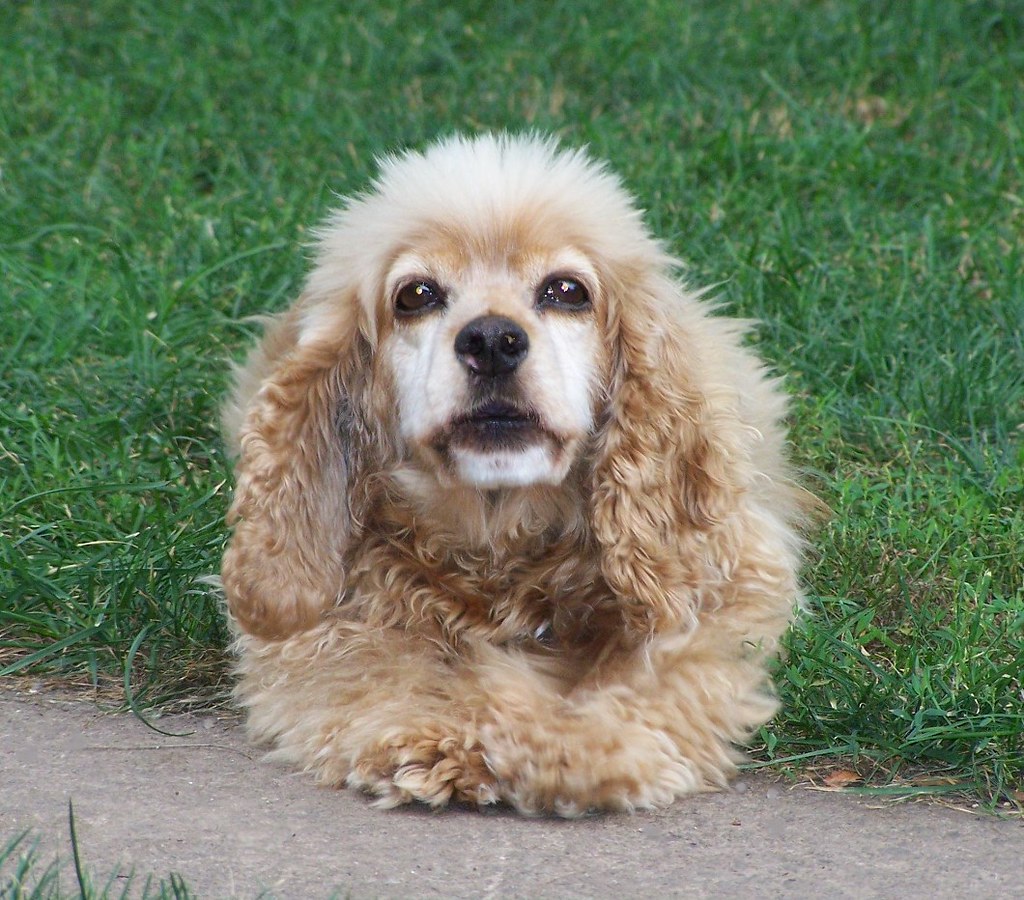
I expected her to be restless or vocal, but she was the opposite. She just stopped in the middle of the kitchen rug runner, her head tilted slightly, looking for a signal I was not yet providing. She is a polite dog. Even when she does not know where she is standing, she remains quiet. I watched her stand there, waiting for her dinner with her front feet placed just a little too wide, bracing herself against the air. It is a specific way she stands when she is waiting for her dinner, a kind of gentle, frozen anticipation that feels very different from the usual hound-mix enthusiasm I see from the younger dog.
Seeing her like that makes me pause by the kitchen counter. I want to rush in and fix the confusion, but I have learned that the distance between her mild confusion and real distress is where I need to stay.

What I wrote in the notebook that night
I sat at the kitchen table with my notebook open, the lamp casting a narrow cone of light over the pages. It was the Tuesday evening after the confusion first started at the back door. I tried moving the water bowl to the center of the kitchen floor, thinking that a change in location might help her navigate the space, but it only seemed to make her pace more aimlessly near the pantry. That was my first mistake. I assumed she needed more room to maneuver, but the clutter was not the issue.
The micro-surprise was how she reacted to the dark. I expected her to be restless in the shadows, but she actually settled into a deep, quiet sleep on the rug runner as soon as I turned the overhead lights off. She looked peaceful, which felt like a contradiction to the frantic energy I saw earlier. I wrote down the time, the way she held her head, and the exact spot where she finally stopped walking. I did not try to interpret the entries. I just kept the record, knowing that the pattern would eventually reveal itself if I stayed patient enough to watch the floor. My notebook is not a diagnostic tool, but it is a way to keep the quiet moments from slipping away.
Adjusting the rhythm of the house
Three weeks ago, I tried to fix the confusion near the back door by leaving the overhead kitchen light on all evening. I thought the extra brightness would help her orient herself when she wandered toward the pantry, but it just made her gaze at the wall for longer periods. It was a failed experiment that left me feeling foolish as I stood by the coffee maker watching her stare into nothing.
The thing that actually helped was moving the long rug runner in the hallway. I shifted it two feet to the left, creating a clearer path toward the back door that she could feel under her paws. It was a micro-surprise to see how quickly she accepted the change; she stopped circling the base of the radiator and instead walked straight toward the door as if the path had always been there.
I also started keeping the leash hook cleared of extra jackets. The heavy coats were creating a visual clutter that seemed to add to her hesitation. Now the space near the back door remains open and quiet. I do not look for grand solutions anymore. I look for the small, physical adjustments that make her daily navigation feel a little less like a puzzle she cannot solve.
Staying in the middle ground
I tried moving the water bowl to the center of the kitchen floor last Tuesday morning, thinking it would help with the pacing. It did not work. Instead, she just circled the bowl twice and bumped into the refrigerator, looking more confused than before. I had expected a simple change to bring clarity, but the result was just more hesitation. The kitchen counter remains the only place where I can set my notebook down and breathe while I watch the room.
My micro-surprise came later that evening when I simply sat on the floor near the back door. I expected her to be restless, given the earlier confusion, but she just leaned her weight against my knee and fell into a deep, quiet sleep. The space between her anxiety and her rest is not a wide canyon. It is just a small, quiet patch of floor where I can wait with her. I do not look for a fix anymore. I look for the next hour, and that feels like enough.
A quieter way to watch
I keep my notebook on the kitchen table, right next to the fruit bowl. It is a small, worn thing that holds the history of our days. When I look at the back door now, I do not see a mystery or a failure of memory. I see a dog who is simply navigating a house that feels a little different than it did last year.
The weight of the afternoon shifts when I stop trying to fix the confusion and start just sitting with it. I watch the light move across the rug runner while the dogs nap. It is not a dramatic change, but it makes the house feel much more readable. Everything in our routine has become ordinary and quiet.
What made that moment feel different
If she had wandered or hesitated, I might have written it off as distraction. Instead she stood at the pantry with full confidence, tail neutral, waiting for the door that was not there. That certainty is what changed the feeling of the moment for me. She was not clowning around. She was using a map that had suddenly filed the wrong wall under "outside."
It also happened at the most unremarkable time. I had a grocery list on the counter. The dryer buzzed a few minutes later. It was exactly the sort of ordinary midday rhythm that makes you question your own reaction. Can something this small really matter if the rest of the afternoon still looks so normal? The answer, at least for me, was yes.
I walked her to the right door, and the second we stepped outside she seemed perfectly fine. That is part of what makes these moments slippery. The wobble can be brief. The dog can recover fast. But brief does not mean meaningless. I started thinking about home-space orientation in a much more serious way after that, which is one reason I wrote a whole post about what disorientation looked like in my house.
What changed in the house after that
I got gentler with transitions. I stopped calling from across the room when I could guide from up close. I cleared visual clutter from the hallway. I stopped leaving random bags beside the back door because I realized even a small change in the outline of a familiar space can matter more to an older dog than I once appreciated.
That day hurt, but it also sharpened me in a useful way. It taught me that ordinary spaces tell the truth first. A dog can still be loving, interested, and basically herself while starting to need home to be simpler and easier to read.