
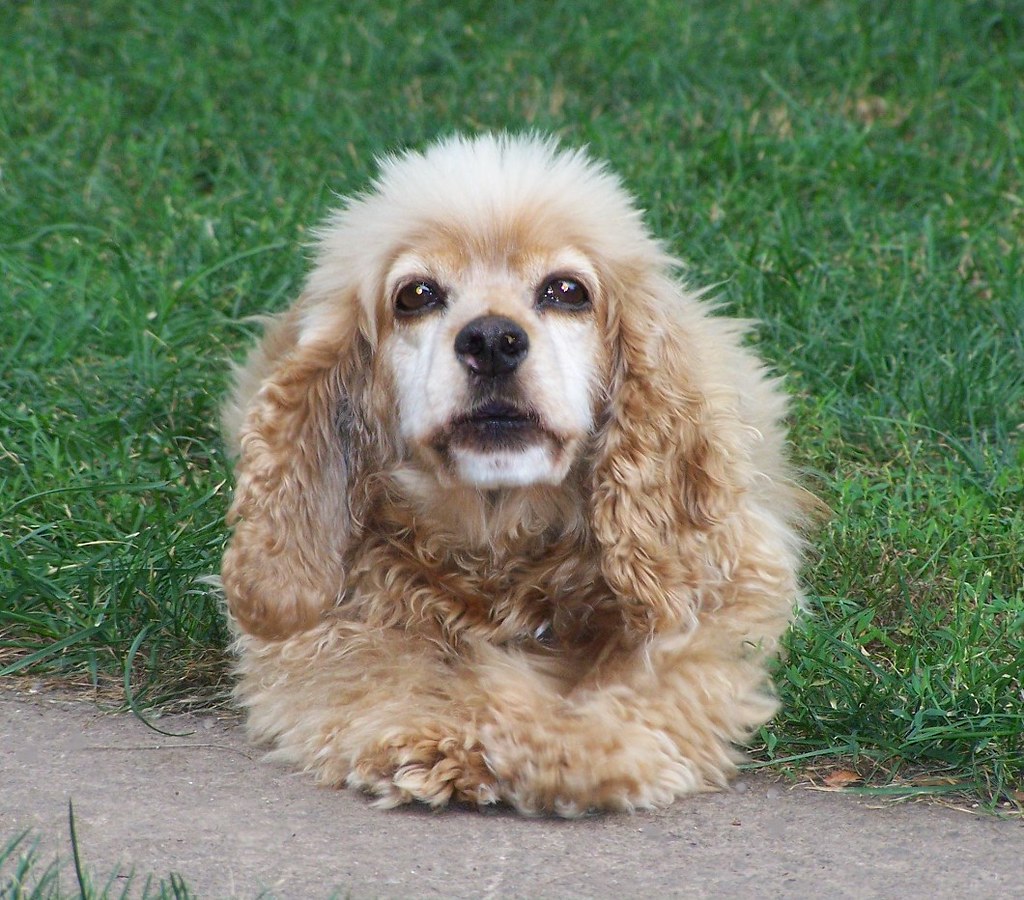
The arrival of a new shadow
I do not believe in loud introductions for a senior rescue, so I kept the house dim and the back door clear. Pickle the senior cocker spaniel arrived with a heavy sigh and a tail that barely tapped the rug runner. He is a small, silver-faced gentleman who seems to know that he is looking for a place to rest his bones. I placed a ceramic dog-bone jar by the coffee maker, filled it with his favorite treats, and let him find the corner of the room that felt safest.

Mabel and Walter stayed back, watching from the hallway with a polite distance that I found quite lovely. There was no barking or crowding, just a steady, quiet awareness of one another in the kitchen.
Why I choose the path of least stimulation
I thought that adding a new, colorful rug runner to the hallway would help Pickle feel more secure during his first week. I imagined the plush texture would offer comfort, but instead, it just made him trip over his own paws every time he navigated the transition from the kitchen. I removed the rug by that Tuesday morning, and the change in his confidence was immediate. He stopped hesitating near the pantry and started moving with a clearer sense of his own space.
It is a quiet observation in how much of my own anxiety I project onto a new dog. I expected him to be restless and needing constant engagement; he was the opposite. He prefers to spend his hours napping on the hardwood floor near the radiator, watching the light shift across the floorboards. Mabel and Walter have settled into this rhythm as well. When I reach for the leash hook by the back door, they do not scramble or bark. They simply stand and wait for me to clip the leads, their bodies relaxed and their focus entirely on the ordinary routine of the yard.
The goal is not to fill every moment with activity. The goal is to provide a home that is readable, where the expectations are low and the environment remains predictable. A house that does not ask a dog to perform is a house that allows a senior to simply exist.
What I noticed in the first seven days
I kept a notebook on the kitchen counter during that first Tuesday morning, expecting to write down a list of behavioral hurdles for Pickle. I thought a strict schedule of outdoor intervals would settle his pacing, but it only made him more frantic near the back door. The constant movement did not calm him; it seemed to amplify his confusion. I stopped the rigid timing and simply sat on the rug runner in the hallway, letting him choose his own pace for a while.

The micro-surprise was how quickly he stopped circling once I removed the pressure of the clock. I expected him to be restless for the entire week; he was the opposite. By the third day, he spent his afternoons near the radiator, watching Mabel and Walter nap. I marked the observations in my notebook with a simple pen, noting the moments he chose to settle instead of wandering.
The hallway rug runner became our primary space for these check-ins. When he needed to stand, I stood with him, and when he decided to lie down, I sat on the floor with my own book. It was not a grand training program. It was just a way to hold the space for him while he learned that the house did not have a hidden agenda. I found that if I stayed still enough, he eventually stopped looking for the exit and started looking for the sunbeams on the floor. Consistency in the house is just another way of saying that the world is safe enough to ignore.
The rhythm of the house
I tried leaving the back door propped open for Pickle on that Tuesday morning, thinking he might like the breeze while he navigated the hallway. I assumed he needed the agency to wander, but it only made him pace the rug runner in circles until he was panting. It was a mistake. The thing that actually helped was closing the door and keeping the kitchen counter clear of anything that smelled like food. Once the space became smaller and more predictable, his breathing slowed down.
I keep a small notebook by the coffee maker to track which hours he spends sleeping versus which hours he spends checking the pantry. It is not complex, but it gives me a better sense of his internal clock. When the house remains quiet, he settles into the space between the radiator and my reading chair. It is a simple shift, but it changed how he experiences the afternoon. Boring, steady rhythm is the best infrastructure I can provide for a senior dog who is still learning how to exist in a new room.
The beauty of a readable space
Pickle now sleeps on the rug runner by the back door, tucked between Mabel and the wall. He has stopped pacing the hallway when the light fades. I watch him from my reading chair, keeping the lamp dimmed low so the room stays soft. There is no performance required of him here. He does not need to be a dog who knows the house rules or the routine of the kitchen. He just needs to exist in a space that is quiet, predictable, and entirely his own. A readable house is a respectful one.